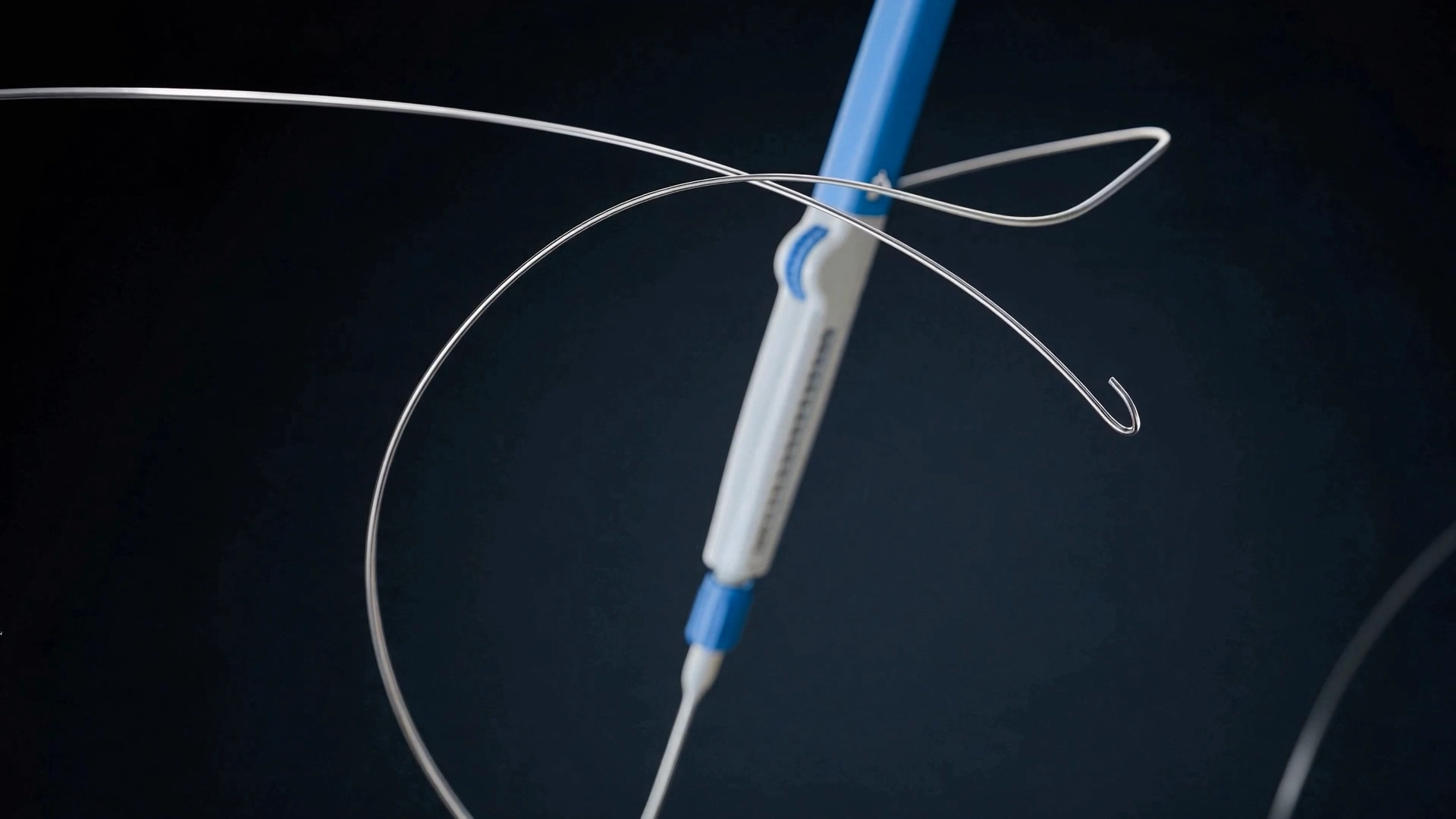
Breaking the torque limit.
Every guidewire turns because the physician turns the whole device, and Albert 14 does that too, all the way to its limit. Then a wheel on the handle deflects and rotates the tip alone, which allows you to go more distal where traditional torque cannot.
A flat image of 3D anatomy.
Cerebral vessels branch in every direction. The physician navigating them sees a 2D X-ray, where a branch that turns toward the viewer and a branch that turns away look identical. The physician brings the tip to the opening and rotates it until it finds the way in. Albert 14 provides a 3D steering mechanism that lets the physician select the branch.
Traditional torque can only go so far.
Rotate the entire wire through tortuous anatomy and the shaft stores the twist instead of passing it on, until it stops turning and releases the twist all at once. Past a certain tortuosity, torque no longer arrives at the tip at all.
Crossevia delivers rotation only at the tip.
Deflection and rotation at the tip alone, while the rest of the wire stays where it is. That is what breaks the limit of both a traditional wire and a steerable one.
Where traditional torque stops working, the tip keeps turning.
Three things the mechanism adds.
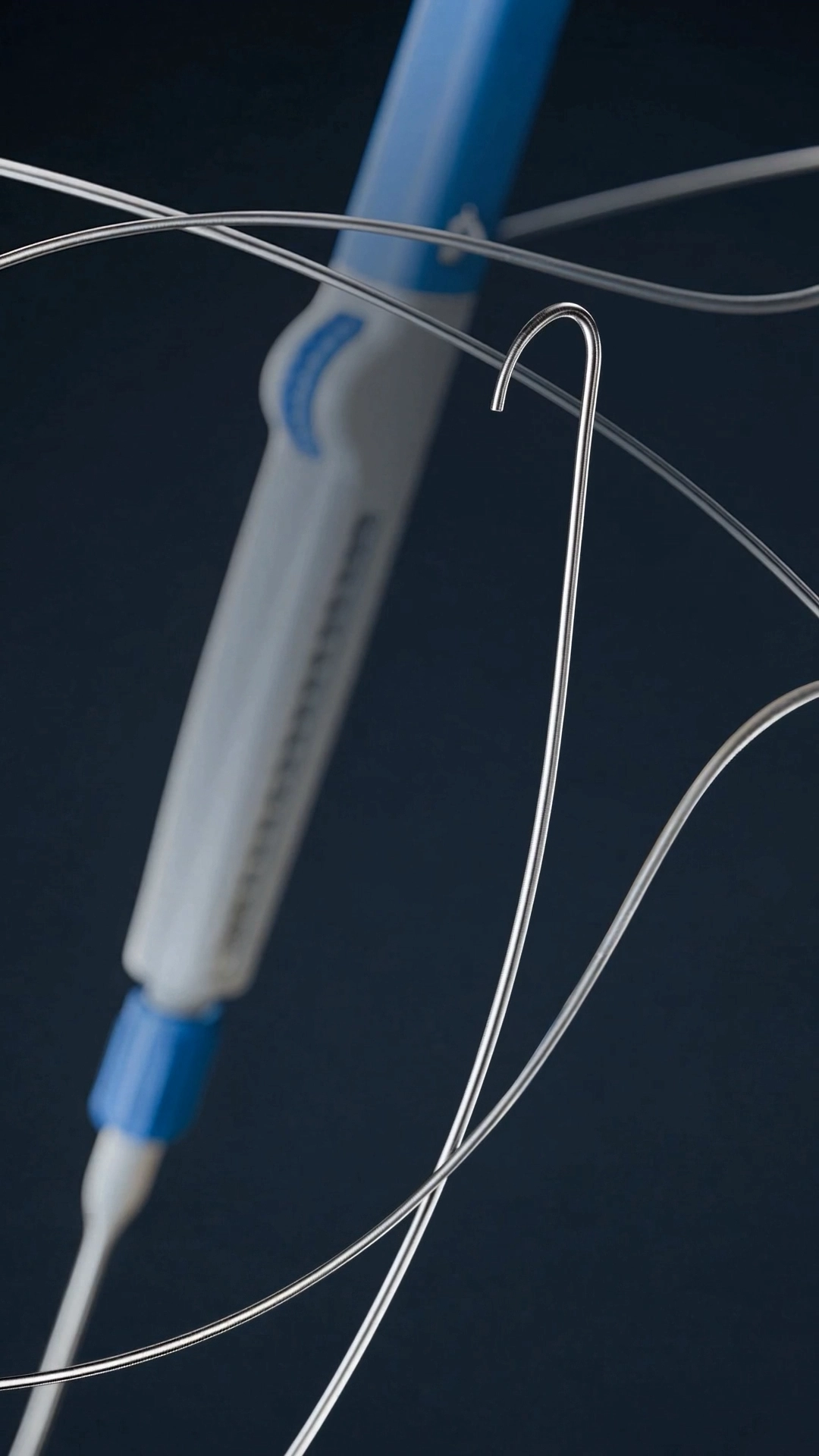
3D Steering Mechanism
In Situ Adaptability
Detachable Handle
Torque the whole wire exactly as you do today. Where that reaches its limit, the mechanism takes the tip one step further.
See how the tip steers.
Request a technical brief, schedule a clinical consultation, or discuss co-development.